
Key takeaways
- Tanzania's US$1.2 billion railway facility shows how a development finance guarantee, commercial banks and insurance capacity can be combined to bring private capital into African infrastructure.
- The proposed US$42 billion LNG project has not reached a final investment decision. An announced project, a financed investment and an active procurement opportunity are three different stages.
- For U.S. firms, the openings are in engineering, equipment, energy technology and logistics around these projects, and they depend on understanding procurement paths and local partnerships.
00Beyond investment announcements: Tanzania's emerging economic transformation
Africa's next wave of investment opportunities may be defined less by the size of its natural resource discoveries and more by its ability to mobilize capital, develop infrastructure, and connect resources to productive industries. Tanzania is emerging as an important case study.
Two recent developments illustrate this shift. On November 4, 2026, the African Development Bank (AfDB) announced the signing of a US$1.2 billion commercial financing facility for Tanzania's Standard Gauge Railway (SGR). Separately, Tanzania's government indicated that negotiations were approaching completion for a proposed US$42 billion liquefied natural gas (LNG) project, potentially unlocking approximately 47.13 trillion cubic feet of natural gas resources.
These developments are at different stages of maturity. The railway financing has been signed, while the LNG agreements remain under negotiation. Nevertheless, viewed together, they reveal a broader investment proposition: Tanzania is positioning transport connectivity, energy resources, and access to international capital as complementary drivers of economic development. For international investors and industrial partners, the commercial implications extend well beyond railway construction or gas extraction.
01The railway deal: a new model for financing African infrastructure
The AfDB-supported transaction represents a significant development in infrastructure financing. The US$1.2 billion commercial facility will support the construction of the 411-kilometer electrified Tabora-Kigoma railway, part of Tanzania's wider Standard Gauge Railway network.
The financing structure brings together nine commercial banks, with Deutsche Bank and Société Générale acting as co-arrangers. At its center is an AfDB Partial Credit Guarantee of up to US$800 million, supported by an international credit insurance arrangement that distributes part of the Bank's exposure. The facility forms part of a broader US$2.3 billion financing package, while AfDB has a mandate to structure and mobilize up to US$3.2 billion for Tanzania's regional railway development.
The significance lies not only in the infrastructure being financed, but in how financing has been structured. By combining development finance guarantees, commercial bank lending, and international insurance capacity, the transaction demonstrates a pathway for mobilizing private capital into large-scale African infrastructure.
For investors, this illustrates how credit enhancement and risk-sharing mechanisms can help bridge the gap between infrastructure demand and commercial financing requirements. For African governments, it offers an example of how development finance institutions can serve as catalysts for private capital rather than relying exclusively on direct public lending.
02The Central Corridor: from transportation infrastructure to economic value chains
The Tabora-Kigoma railway is strategically important because it extends Tanzania's transport connectivity toward Lake Tanganyika and regional markets. Through Kigoma, the railway is expected to strengthen commercial connections with the Democratic Republic of Congo, particularly through lake transport links to Kalemie. The wider railway program also supports regional integration with Burundi and eastern DRC.
Its economic value will depend on more than moving freight. A competitive transport corridor can unlock investments in agricultural production, mineral logistics, warehousing, industrial facilities, and cross-border trade. The commercial opportunity therefore extends into several interconnected markets: rail engineering, signaling, electrification, and maintenance services; freight terminals, warehousing, and logistics management; industrial equipment, machinery, and spare-parts supply; agricultural and mineral value-chain infrastructure; and digital systems for freight management, tracking, and trade facilitation.
These are potential areas of commercial demand, not confirmed procurement opportunities under the signed financing facility. The broader investment thesis is straightforward: transport infrastructure creates greater economic value when it connects productive industries to reliable markets.
03The US$42 billion LNG opportunity: energy as an industrial catalyst
Tanzania's proposed LNG development represents another major component of its investment ambitions. According to Reuters, the project is led by Equinor and Shell, with ExxonMobil, Pavilion Energy, Medco Energi, and the Tanzania Petroleum Development Corporation among the participating companies. The proposed development aims to commercialize approximately 47.13 trillion cubic feet of natural gas resources. Most LNG production is expected to target export markets, with a portion reserved for domestic use.
While the estimated US$42 billion investment is substantial, the project has not yet reached a confirmed final investment decision. Its eventual implementation will depend on completing agreements and resolving the remaining commercial, regulatory, financing, and execution requirements.
The larger economic opportunity is not limited to LNG exports. Gas development could create demand across multiple supporting industries, including gas processing and associated infrastructure; power generation and electricity distribution; engineering, construction, and specialized industrial services; maritime logistics and equipment supply; and industrial manufacturing and potentially gas-based downstream industries.
The relationship between gas development and industrialization is particularly important. Export revenues can strengthen a country's economic position, but sustained industrial development requires reliable energy, competitive infrastructure, investment in productive capacity, and access to markets. Tanzania's stated ambition to increase electricity generation capacity to approximately 8,000 MW by 2030 reinforces the importance of connecting energy investment with domestic economic demand. The challenge will be ensuring that major energy investments contribute to competitive industries and broader economic participation.
04The capital markets dimension: why bankability matters
The railway financing demonstrates how a defined infrastructure project can attract commercial lenders when supported by an appropriate financial structure and risk-mitigation instruments. The LNG development illustrates a different stage of the investment cycle, where substantial resource potential must still be translated into final agreements, financing commitments, and executable project plans.
Both cases raise fundamental questions for investors and project developers. Is the project commercially viable? Is there sufficient demand? Are the risks appropriately allocated? Are the counterparties capable of executing? These questions increasingly determine whether major investment announcements become operating assets.
Tanzania is also seeking to broaden foreign investor participation in its domestic capital markets, while pursuing investments capable of generating revenues to support their operations. This direction reflects a wider challenge across emerging economies: mobilizing long-term capital while maintaining sustainable financing structures. For international investors, commercial banks, export credit agencies, and development finance institutions, the opportunity is to develop financing arrangements that align project risks, capital requirements, and long-term economic returns.
Perhaps the most important lesson emerging from Tanzania is the distinction between investment potential and investment readiness.
05What this means for U.S. companies and international partners
For U.S. businesses, Tanzania's evolving investment landscape presents potential opportunities across several sectors aligned with American industrial capabilities. These include engineering and construction services, industrial machinery, energy technologies, transport systems, digital infrastructure, logistics, and specialized technical services.
However, entering these markets requires more than identifying a large project. Companies must understand procurement pathways, regulatory requirements, local partnership expectations, project financing structures, and implementation schedules.
At ANCAPA Global Partners, we view this as a critical area where international commercial advisory can contribute value: connecting investment opportunities with qualified industrial partners, technical capabilities, and financing ecosystems. Our focus is on helping bridge the commercial distance between emerging-market opportunities and the international businesses positioned to participate in them.
The distinction between a publicly announced project, a financed investment, and an active procurement opportunity is essential.
06The bigger picture: Africa's next investment cycle will be defined by execution
Tanzania's railway financing and LNG ambitions point toward an increasingly interconnected investment landscape. Transport corridors can improve access to markets. Energy infrastructure can support industrial production. Financial innovation can unlock capital. Strategic partnerships can connect these investments to technology, expertise, and commercial demand. But none of these outcomes is automatic. Their long-term economic contribution will depend on execution, institutional coordination, project readiness, and the ability to develop productive industries around major infrastructure assets.
For investors and businesses evaluating Africa's next growth opportunities, the central question is shifting. It is where capital, infrastructure, industrial demand, and execution capacity are coming together to create commercially viable opportunities. Tanzania is becoming an important market to watch through that lens.
It is no longer simply where the resources are located or how much investment has been announced.
07About ANCAPA Global Partners
ANCAPA Global Partners is a U.S.-based strategic investment and commercial advisory platform connecting international business opportunities with U.S. capital, industrial expertise, technology, and strategic partnerships. Our activities span energy, natural resources, infrastructure, digital transformation, and capital markets, with a focus on Africa and other emerging growth markets.
Keep reading
More from ANCAPA Insights.
 Energy & Infrastructure
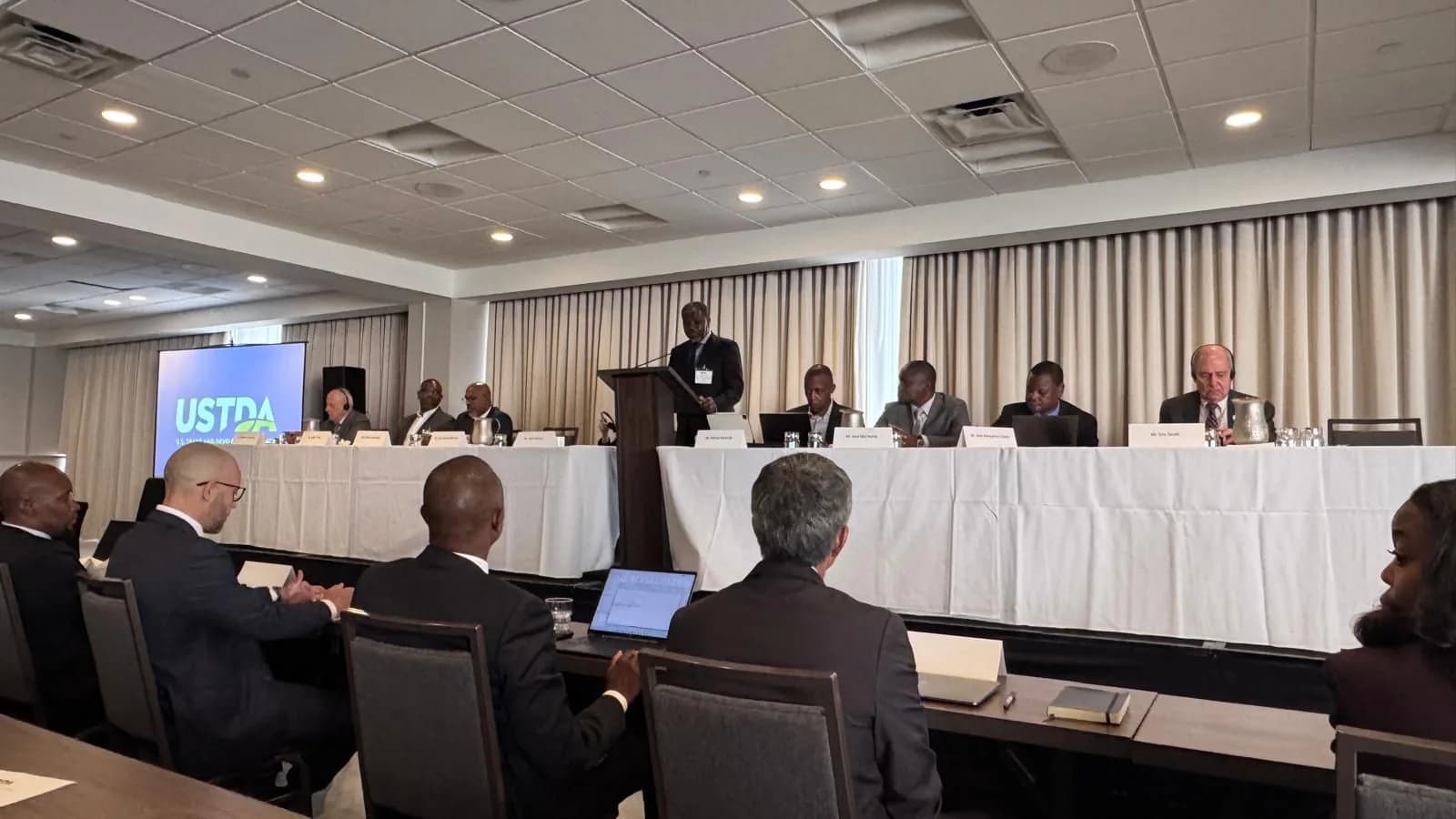
Beyond LNG: Angola and Mozambique's Next Energy Investment Opportunity Is Infrastructure
From gas production to industrial development, the next investment cycle will depend on connecting resources, infrastructure, technology and commercially viable markets.
 Resources
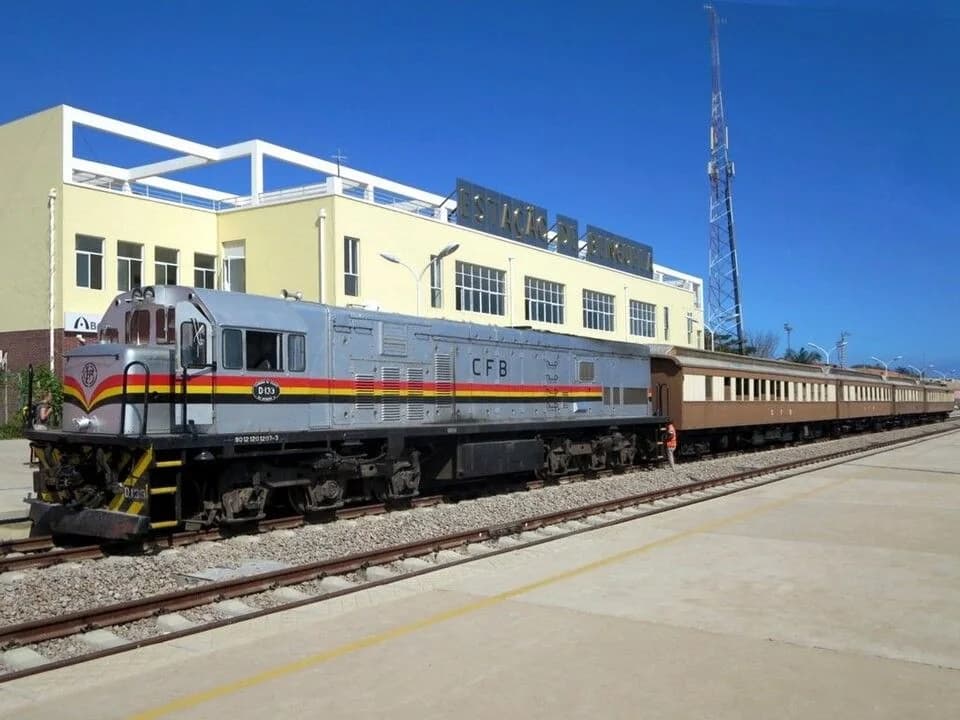
The Lobito Corridor's Next Investment Frontier: From Critical Minerals to Bankable Industrial Growth
Why the latest developments in Angola, Zambia, and the DRC could open a new phase of U.S.-Africa investment, infrastructure development, and regional industrialization.
 Resources
The Mine Is Only the Beginning: Who Will Capture Africa's Second Mining Boom?
As global competition for critical minerals accelerates, a potentially larger commercial opportunity is emerging beyond extraction, in the energy, infrastructure, technology, equipment and industries that make mining possible.
Start a project conversation
Bring us a project, or a mandate to deploy.
If you control a project seeking a U.S. development, technology or commercial partner, or your company is looking for qualified opportunities in African growth markets, let's discuss a specific fit.
Partner with ANCAPABased on the African Development Bank announcement of November 2026 and Reuters reporting of October 13, 2026. ANCAPA Global Partners analysis based on publicly reported information. Potential commercial opportunities identified in this article do not constitute confirmed procurement, investment commitments, or guarantees of project implementation.