
Key takeaways
- The AI race is becoming an energy race: reliable, competitively priced electricity and high-capacity connectivity are emerging as the next competitive advantage for computing infrastructure.
- Angola combines a fast-growing, increasingly renewable power system with direct South Atlantic digital links to Brazil and the United States.
- AI investment in Angola must strengthen energy access, not compete with households and industry for scarce electricity.
00The global AI race is becoming an energy race
The global competition for artificial intelligence is entering a new phase. While much of the attention has focused on advanced semiconductors, computing power, and technological innovation, a more fundamental constraint is emerging: electricity. The infrastructure required to train, operate, and scale AI systems depends on enormous quantities of reliable energy. Data centers are becoming major industrial electricity consumers, forcing governments, utilities, and technology companies to reconsider where future computing infrastructure can be developed.
The International Energy Agency projects that global data-center electricity consumption could rise from approximately 485 terawatt-hours in 2025 to around 950 terawatt-hours by 2030. This demand is already creating pressure on electricity networks, equipment supply chains, and energy investment plans.
In the United States, the expansion of AI data centers is also generating public opposition. Communities are increasingly questioning the implications for electricity tariffs, water consumption, environmental impacts, and the distribution of infrastructure costs. The challenge is not confined to the United States. European markets are confronting similar questions around energy availability, permitting, grid congestion, and the social acceptance of new computing facilities.
These developments do not necessarily imply that AI infrastructure will migrate away from established technology markets. They do, however, create a compelling case for geographical diversification. The next competitive advantage in AI infrastructure may belong not only to countries with advanced technology, but also to those capable of providing reliable, competitively priced electricity and high-capacity digital connectivity. This is where Southern Africa, and Angola in particular, deserves greater attention.
01Angola's electricity transformation creates a new investment proposition
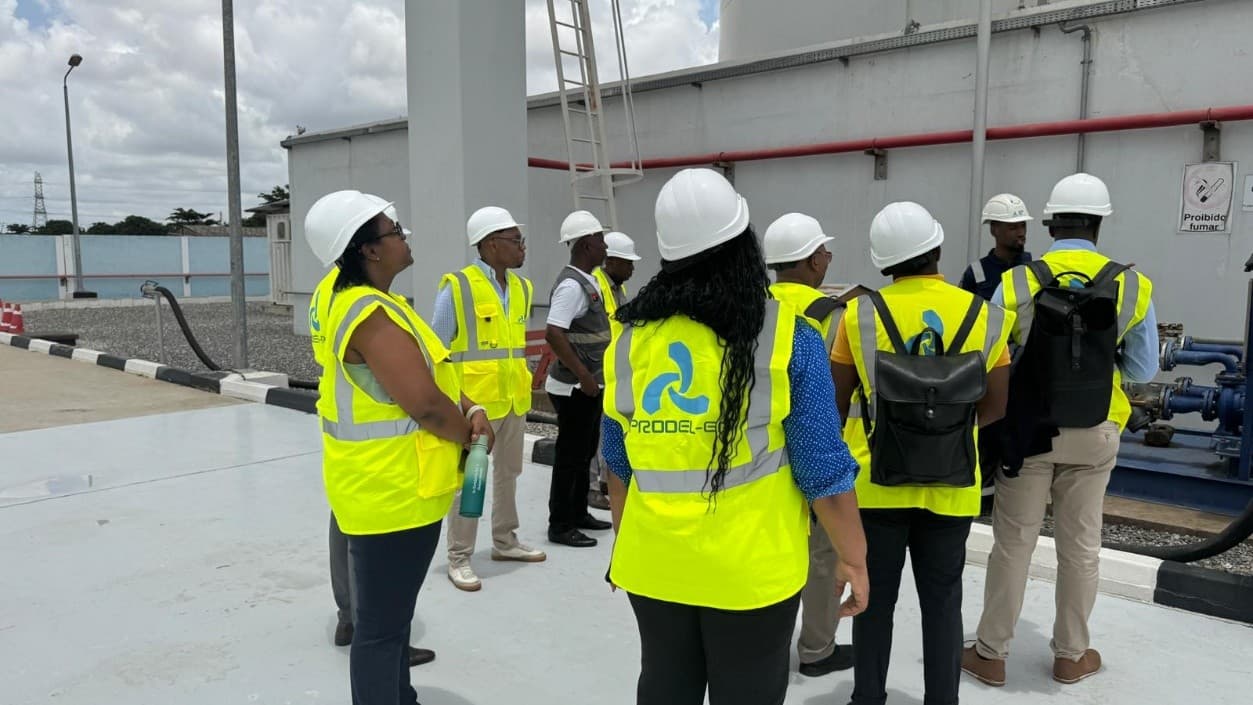
Angola is undergoing a substantial transformation of its electricity system. Figures presented by Angola's public electricity producer, PRODEL, illustrate the scale of this change. In 2015, the country had approximately 2,356 MW of installed generation capacity, with thermal power representing more than 61% of the electricity mix by installed capacity. By 2024, installed capacity had increased to approximately 6,284 MW, with hydropower accounting for around 60%. That is an increase of roughly 167% between 2015 and 2024.
The presentation's 2027 scenario projects installed capacity reaching approximately 9,618 MW, a further increase of about 53% over 2024, with renewable sources representing around 77% of the total, primarily hydropower and an expanding solar portfolio. These projections are ambitious and remain dependent on project delivery, grid integration, and financing.
Nevertheless, the transformation is significant. Angola's electricity system is moving from substantial dependence on thermal generation toward a more diversified portfolio anchored by large-scale hydropower and solar energy. The shift also has economic implications. According to the PRODEL presentation, national diesel consumption associated with electricity generation declined from approximately 1.36 billion liters in 2015 to 430 million liters in 2024. This reduction reflects the potential economic value of replacing expensive fuel-dependent generation with domestic electricity resources.
For investors considering energy-intensive digital infrastructure, Angola's changing electricity mix provides an increasingly relevant foundation for assessing future opportunities. But the more important question is how the country can convert expanding generation capacity into reliable electricity supply for productive industries.
02The next milestone: hydropower, solar, and industrial demand
Several projects could strengthen Angola's future electricity supply. The Caculo Cabaça hydropower project, located in Cuanza Norte, is designed to add approximately 2,172 MW to the national system. In June 2026, Angola's Ministry of Energy and Water reported that civil works had passed 51% completion, with the first generating unit expected to begin operating in 2027.
The electricity-sector presentation also identifies planned solar developments, including a 400 MWp project in Malanje, 104 MWp in Catete, and 90 MWp in Cabinda, alongside solar and battery-storage investments intended to support regional and rural electrification. These developments suggest that Angola is building a more substantial electricity-generation platform.
The investment opportunity, however, extends beyond constructing additional power plants. New electricity capacity requires commercially sustainable demand. Mining, mineral processing, manufacturing, logistics, and digital infrastructure can potentially provide that demand. AI-ready data centers represent one possible component of this industrial development strategy.
Unlike many traditional industrial facilities, certain types of computing workloads can be geographically distributed, provided electricity reliability, telecommunications performance, data-security requirements, and commercial economics are suitable. This creates a potential opportunity for Angola to explore how future electricity investments could support both domestic industrialization and international digital services.
The strategic proposition is not to generate electricity solely for export. It is to convert electricity into higher-value economic activity within Angola.
03Angola's Atlantic advantage: electricity meets digital connectivity
Angola possesses another asset that could distinguish it from several emerging African electricity markets: direct digital connectivity across the South Atlantic. Through Angola Cables and its international network, the country is connected to major communications markets in Africa, Europe, Brazil, and the United States.
The South Atlantic Cable System (SACS) connects Angola directly with Brazil, while the MONET network extends connectivity between Brazil and the United States. In September 2026, Angola Cables and U.S. networking company Ciena announced an upgrade of their transatlantic systems to support higher-capacity services and growing AI-related network traffic. According to the companies, the combined infrastructure provides a route between Angola and the United States with approximately 130 milliseconds of round-trip delay.
This is an important development. It means Angola's Atlantic location is not merely a geographic advantage. It is supported by operational digital infrastructure connecting the continent with major international markets. For certain computing applications, including batch processing, data analytics, selected AI training and inference workloads, backup services, and regional cloud infrastructure, these connections could help support distributed operations. However, transatlantic latency would not be suitable for every application. Real-time, highly latency-sensitive services would continue to benefit from computing facilities closer to their end users.
The commercial opportunity therefore lies in identifying workloads that can operate competitively from Angola while also serving growing demand within Africa. Angola could begin positioning itself not simply as an energy producer or a communications transit point, but as a potential location where electricity and digital connectivity are combined to deliver computing services.
04Why the SADC region matters
Angola's opportunity becomes more significant when viewed within the Southern African Development Community. Southern Africa possesses substantial energy resources, mineral reserves, industrial demand, and emerging digital infrastructure. South Africa already hosts a more developed data-center and cloud ecosystem, supported by international technology companies and regional enterprise demand.
Other SADC countries offer opportunities in renewable energy, industrial development, logistics, and digital services. The region's longer-term potential lies in connecting these assets rather than treating each national market in isolation. The Southern African Power Pool provides an institutional framework for regional electricity cooperation and trade.
Angola is pursuing transmission investments intended to support eventual interconnection with the regional power system, including the proposed Angola-Namibia interconnection. These developments could strengthen regional energy integration over time. However, Angola is not yet fully integrated into the operating regional electricity market, and the physical infrastructure required for large-scale cross-border power trade remains under development.
A regional AI infrastructure strategy would therefore need to be built progressively. In the near term, individual countries could develop facilities around locations with reliable electricity and strong fiber connectivity. Over the longer term, regional transmission investment, digital connectivity, and shared industrial standards could support a more integrated Southern African computing ecosystem. Such a strategy could complement existing data-center markets rather than attempting to replace them.
05The investment opportunity: building an Atlantic AI Infrastructure Corridor
Angola's emerging electricity and digital infrastructure assets suggest the possibility of a new development concept: an Atlantic AI Infrastructure Corridor. This would not necessarily require the immediate construction of hyperscale AI campuses. A more realistic starting point would be to identify commercially viable locations where electricity supply, fiber connectivity, industrial land, and operational services can be integrated. Three investment clusters merit further evaluation.
Luanda and the Atlantic connectivity ecosystem. The Luanda area offers proximity to existing telecommunications infrastructure, commercial institutions, technical service providers, and major electricity networks. This makes it a logical candidate for evaluating carrier-neutral data centers, cloud infrastructure, enterprise computing, and regional AI services. The commercial feasibility of individual sites would depend on power quality, available electrical capacity, fiber redundancy, land availability, and customer demand.
Lobito and the emerging industrial corridor. The Lobito Corridor is increasingly attracting attention as a strategic logistics and industrial development platform. Its relationship with mining, transport, regional trade, and infrastructure investment creates opportunities for industrial digitalization. AI infrastructure associated with logistics optimization, mining analytics, geospatial intelligence, supply-chain monitoring, and industrial automation could potentially serve this wider economic ecosystem. Lobito's suitability for larger computing facilities would still require detailed assessments of electricity availability, fiber routes, and infrastructure costs.
Energy-linked industrial and digital zones. A third opportunity could involve identifying sites near major electricity infrastructure where long-term industrial demand could support dedicated transmission, renewable energy, and digital facilities. Such developments might combine data centers with industrial parks, technology training, renewable energy investment, and local enterprise development. These concepts should be treated as opportunities for feasibility assessment rather than pre-existing investment-ready projects.
06The financing opportunity: connecting energy investment with AI capital
The rapid expansion of AI infrastructure is attracting significant capital from technology companies, infrastructure funds, private equity investors, development finance institutions, and specialized data-center developers. Angola could explore how to connect this demand with its electricity and digital infrastructure development priorities. Several investment models deserve consideration.
Energy-backed digital infrastructure: long-term electricity supply agreements could provide predictable revenue for generation and transmission investments while supporting data-center operations. Joint infrastructure development: electricity utilities, telecommunications operators, and data-center developers could cooperate on sites where power, fiber, land, and industrial services are developed together. Development finance and private capital: eligible infrastructure investments could potentially combine DFI support, commercial debt, private equity, export credit, and strategic industrial partnerships.
Technology and equipment partnerships: U.S. and international suppliers could contribute computing equipment, cooling systems, electrical infrastructure, fiber technology, industrial automation, and operational expertise. Regional digital services: facilities could initially serve Angolan and Southern African enterprises, governments, universities, and industrial operators before expanding into selected international computing markets.
The strongest financing structures would be built around identifiable customers, commercially realistic electricity prices, verified infrastructure capacity, and credible operating partners. The opportunity is not simply to attract AI investment because electricity generation is expanding. It is to establish an investment proposition in which reliable electricity, connectivity, commercial demand, and financing are demonstrably aligned.
07The essential safeguard: AI investment must strengthen energy access
Angola's opportunity must be evaluated against an important development reality. Despite significant generation investments, electricity access remains limited. World Bank analysis indicates that approximately 44% of the population had access to electricity in 2023. The country's transmission network remains divided into separate regional systems, with electricity supply concentrated heavily in the north.
This creates a fundamental policy challenge. Large AI data centers could become important industrial electricity consumers, but their development should not divert affordable power away from households, small businesses, or existing industries. Nor should international investors assume that installed generation capacity automatically represents available surplus electricity.
A successful strategy would require additional transmission capacity, reliable supply arrangements, backup systems, and careful evaluation of hydrological risks. It would also require transparent cost allocation so that ordinary consumers are not left financing infrastructure built primarily for large commercial users. This is particularly important given the public opposition emerging in established Western data-center markets. Angola has an opportunity to learn from those experiences before major projects are developed.
A well-designed digital infrastructure investment could help finance additional electricity capacity, strengthen local grid infrastructure, support workforce development, and create new demand for domestic technical services. But these benefits would need to be established through credible contractual arrangements, not assumed.
The objective should be to make AI infrastructure an accelerator of electrification and industrial development, not a competitor for scarce electricity resources.
08ANCAPA perspective: connecting Africa's energy resources with the global digital economy
At ANCAPA Global Partners, we believe the convergence of electricity infrastructure, artificial intelligence, international connectivity, and investment capital represents an emerging opportunity for African economies. For Angola, the strategic advantage lies in the combination of expanding renewable generation, established Atlantic connectivity, and growing opportunities for industrial diversification. Yet transforming these assets into commercially viable digital infrastructure will require coordinated investment preparation. Three gaps deserve particular attention.
The infrastructure readiness gap: potential sites must be assessed for dependable electricity, transmission capacity, fiber connectivity, cooling requirements, land access, and operational resilience. The commercial partnership gap: Angolan institutions and project sponsors need access to qualified data-center developers, computing infrastructure operators, equipment suppliers, technology companies, and international investors. The financing gap: electricity and digital infrastructure investments must be structured around credible demand, sustainable revenue models, and appropriate combinations of development finance and private capital.
ANCAPA's U.S.-anchored investment and strategic development platform is positioned to explore opportunities at the intersection of these sectors. Through our Energy, Infrastructure, Digital, Capital, and Supply platforms, we see potential to support project identification, investment readiness, strategic partnerships, equipment sourcing, and commercial engagement with U.S. and international companies.
A practical first step would be to explore an Angola Atlantic AI Infrastructure Investment Initiative, bringing together electricity-sector institutions, telecommunications operators, potential industrial sites, U.S. technology companies, and infrastructure investors. The initiative could begin with a structured market and feasibility assessment covering electricity availability, fiber infrastructure, potential computing demand, commercial structures, and investment requirements. Rather than proposing a large data-center development immediately, the objective would be to identify a realistic pilot opportunity capable of demonstrating commercial demand and local economic benefits.
09Looking ahead: from electricity generation to digital economic value
The global AI economy is creating new relationships between electricity, technology, geography, and capital. Countries that can combine dependable energy, digital connectivity, competitive infrastructure, and investment-friendly operating conditions may gain new opportunities to participate in the computing economy.
Angola has several foundations worth examining. Its electricity generation capacity has expanded substantially. Its energy portfolio is becoming more renewable. Its Atlantic telecommunications networks are being upgraded to support increasingly demanding digital applications. The challenge is converting these assets into an integrated, investment-ready proposition.
Success would require much more than attracting international data-center developers. It would require strengthening electricity access, building local technical capabilities, creating commercially viable digital services, and ensuring that new investments contribute to Angola's wider industrial transformation. For the SADC region, the longer-term opportunity is equally significant: a more connected energy and digital economy capable of supporting African enterprises while participating in international technology markets.
Africa has long exported the resources that power global industries. The next opportunity is to use those resources to host, operate, and capture value from the industries themselves. For Angola, the convergence of renewable electricity and Atlantic connectivity could provide an opening to participate in that transformation. The opportunity is real enough to investigate. The next step is to make it bankable.
Start a project conversation
Bring us a project, or a mandate to deploy.
If you control a project seeking a U.S. development, technology or commercial partner, or your company is looking for qualified opportunities in African growth markets, let's discuss a specific fit.
Partner with ANCAPAReferenced in this article: International Energy Agency data-center electricity projections; PRODEL (Angola) electricity-sector presentation; Angola Ministry of Energy and Water update on Caculo Cabaça, June 2026; Angola Cables and Ciena announcement, September 2026; World Bank electricity access data. Copyright: Antonio Inguane.